2004 President’s Trophy Air Race Images
2004-06-10
2004 PTAR – Top 3 Crews and Aircraft

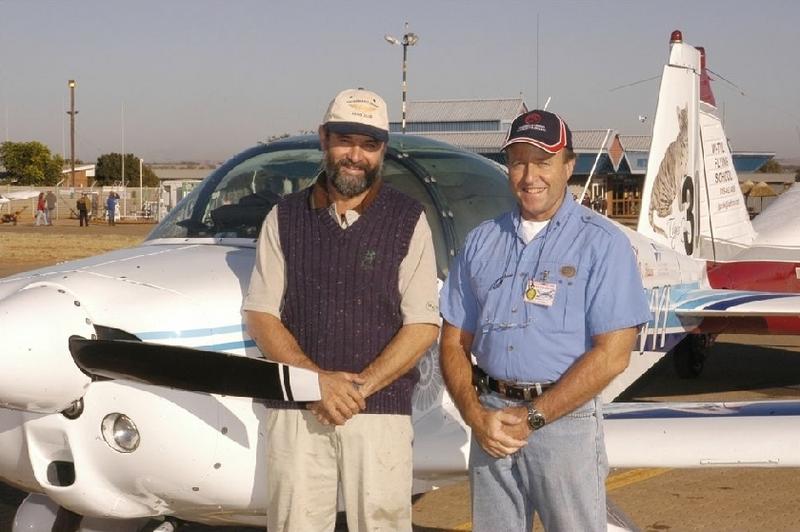
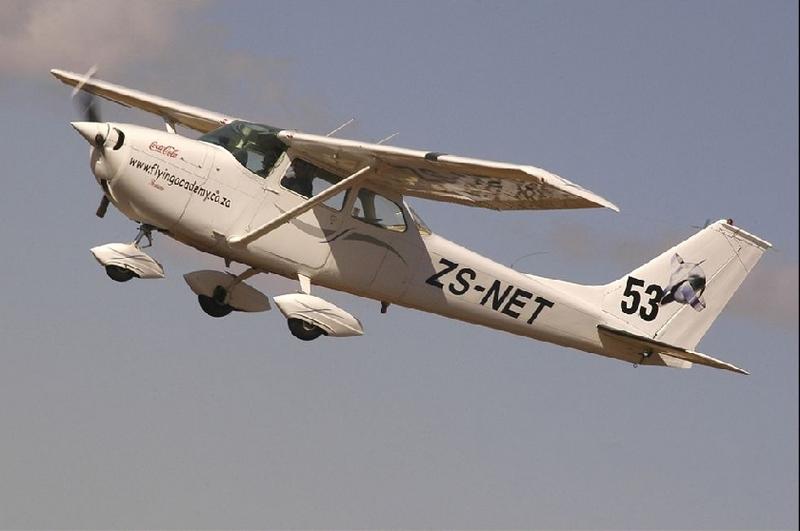

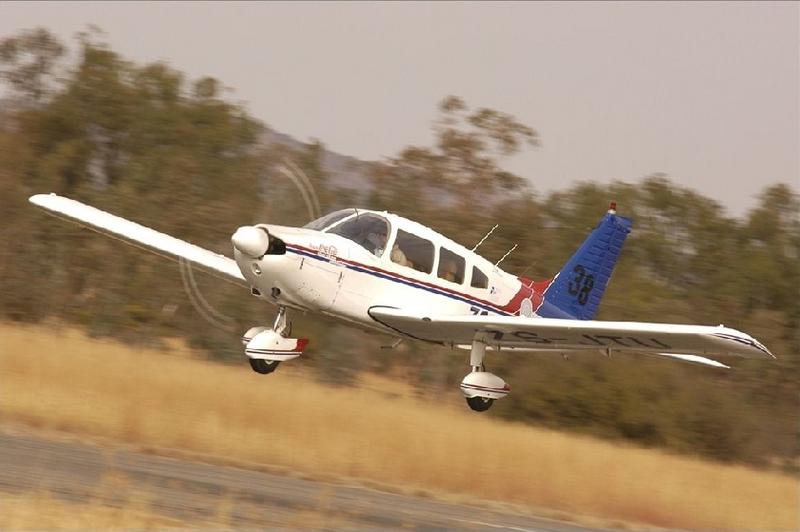
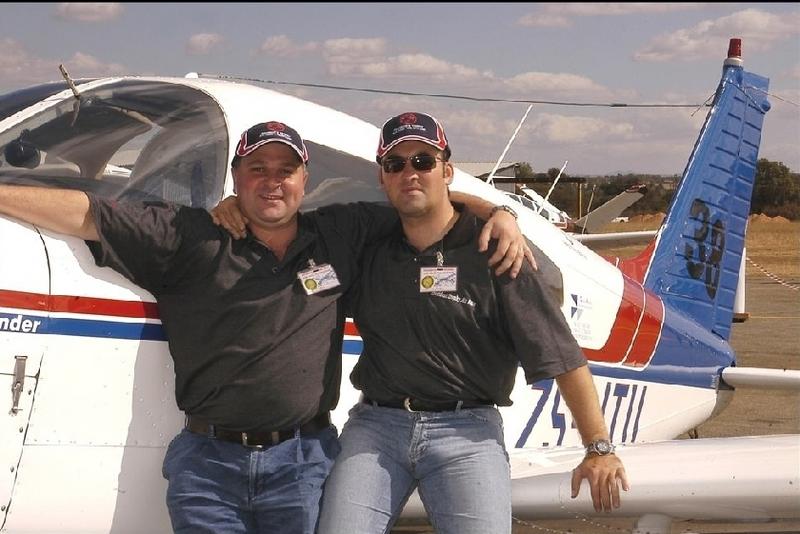
2004 PTAR – Other



















By Chris Booysen
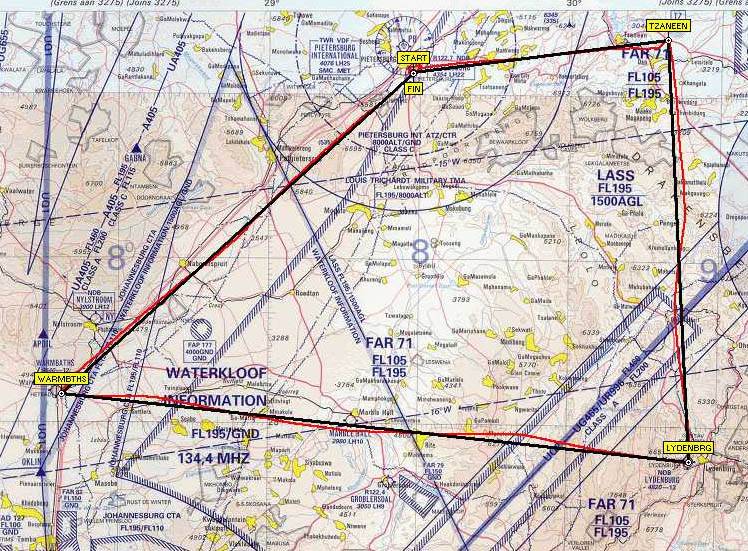
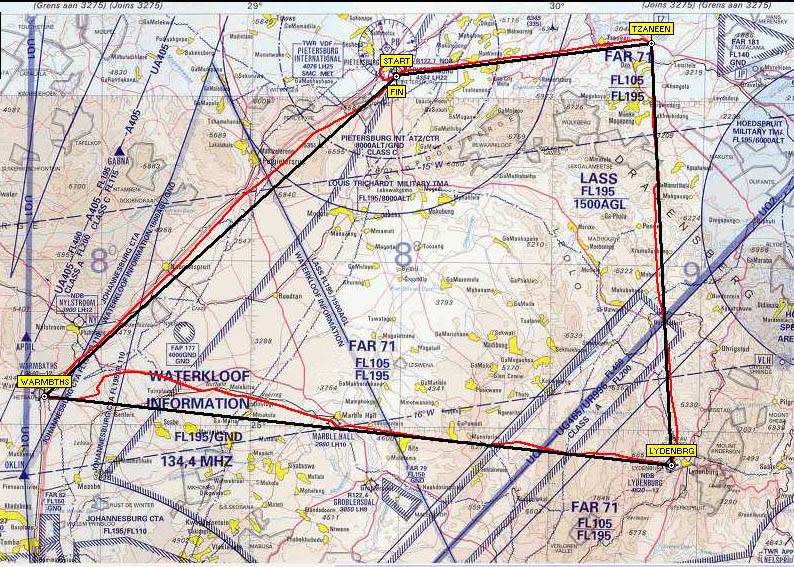
As in prior years a number of aircraft were fitted with loggers. While it is difficult to come to any significant conclusions from the limited data, there is some interesting information that can be extracted from the logger tracks.

For those that have not yet come across the loggers, some general information. The loggers were designed by Jan Hanekom and are manufactured by him in Pretoria. They have been approved by the FAI for competition use. While there are two other loggers approved by the FAI, the South African one has the widest distribution worldwide. This is not only due to the quality of the equipment but also to the sophistication of the software that is available to analyse the tracks logged. The software is also local.
The logger basically records the longitude and latitude and altitude every second, in other words the three dimensional position of the aircraft every second. Using these plotted positions the software can calculate the heading, climb/decent and ground speed of the aircraft.
The logger information has been used as one of the tools for setting handicaps and as a tool to detect the use of GPS in aircraft. The shortage of logger units has been a problem as this has prevented their extensive use.

The total distance actually flown by the Race winners, Harry Antel and Barry de Groot for the two days was 651.957 miles. This compares to the actual distance of the race of 649.50 miles. The logger track shows that they did go off the direct track on occasions one must remember that at times slightly left or right of track might save an unnecessary climb. Their average speed over the distance they actually flew (ie including off track errors)was 134.9 as opposed to their speed achieved of 134.37 and handicap speed of 127.50
Another aircraft that had a logger for both days was LXR. The total distance actually flown by them for the two days was 651.8 miles. An additional distance of 2.3 miles. Their average speed over the distance they actually flew was 197.9 as opposed to their speed achieved of 197.13 and handicap speed of 195.64

WZU lost time at Giyani on the first day (approx 4 minutes). The actual distance flown by them on day 2 was 329.017 miles or 2.617 miles longer than the course. Their average speed for the distance they flew was 198.57 knots as opposed to their handicap speed of 193.65knots. If they had maintained that speed for the two days and stayed on course they would have gained 4 minutes 59 seconds which would have moved them up 17 places but they still had no chance of winning the race.

I have drawn no conclusions from the facts above. I do not believe that there is sufficient data and information to make any generalisations. What is interesting to note that the aircraft that were test flown tended to be in the middle of the field and their actual speeds were close to their handicap. Does this mean that aircraft handicapped with the use of logger information have more accurate handicaps. It is the intention to introduce more and more loggers in the aircraft until every aircraft flies both legs with a logger and logged aircraft information is used for purposes of determining the handicap of the participants.
After the World Champs of 2003 none of the competitors, organisers, marshals, crew, helpers or even just bystanders had enough time to recover before the S A Nationals arrived. The Rally and Precision events were combined, as this is the format for the forthcoming Worlds in Denmark later this year. Due to lousy weather, lack of funds, time and various other excuses, the competitors did not put in the practise that they should have. Especially when compared to the hour’s put in last year. S A P F A managed to convince Deon and his team to organise and manage this years event at Brits airfield, and what a job they did! With limited funds and staff it was professionally planned in true “Deon” style.

Hazy weather and mist over the mountains saw the start delayed and all our nerves rattled, but once we got airborne, the competition was on. Staying on track and finding checkpoints is no longer a matter of just waiting for them to appear. The course was a tough one but very fair. From the point of view that if you had you thumb out your bum and your mind out of neutral everything would work. Obviously Nigel, Ron and Hans had just that with only 80 penalties separating the three of them.

This was held on the afternoon of day 1. Once again Nigel and Hans put in a stunning performance with 31 and 47 penalties respectively. One actually has to see these landings to appreciate them.
Once again a slight delay due to weather but when it cleared the race was on. This time Adrian pulled out all the stops and gave Nigel a run for his money, getting to within 12 points of the champion. Yes! – again Nigel Hopkins the champ with Hans Schwebel 2nd and Adrian Pilling 3rd.
Some rule changes have taken a lot of pressure off the navigator as far as plotting is concerned. But then that’s not all a navigator has to do. He now had to get more involved in observation as well as assisting the pilot in staying perfectly on track.

The route took us over the Magalliesberg and back. Then towards Rustenberg, up north past the Bospoort Dam and back to Brits. Nigel and Dale finished with only 10 flight and zero landing penalties and a total of 210 for the day. Barry and Mary closely followed them with 306.
This route took us to the northeast of Brits in an area that none of us had really flown before. After four days of pressure and concentration, every crew was glad to see the finish. Nigel and Dale first again with only 10 flight penalties, zero landing and a total for the day of 110 with Barry and Mary giving them a hard time only 33 penalties behind. This time Hans and Ron pulled out all the stops and finished with 280 for the day. A logger failure for Frank and Quentin really spoilt their day but the have proved there ability on previous events.
Morné and Jurie du Toit won the sportsman class. With Brett Williams and his daughter, Christine 2nd.
The Precision team chosen to represent South Africa in Denmark later this year is:
The Rally Flying team is:
Rob Spencer-Scarr and Chris Booysen were appointed manager of the team.
