
November 2006

Barry de Groot has made a significant contribution to Sport and Recreational aviation in South Africa.

Barry started flying in 1979 and has a tremendous flying record covering the approximately 25 years and 2 500 flying hours.

Barry has represented South Africa on 14 occasions at World Championships, seven times in Rally Flying, six times in Precision Flying and once in Microlighting. He has also acted as team manager for the South African team. Barry has been a co-recipient of the S A Eagle trophy on two occasions.

In the competition arena Barry is also a regular participant in the President’s Trophy Air race and has won it once and been on the podium on three further occasions.

He has also contributed by organising competitive flying events in Kwa-Zulu Natal.

Barry has been on the committee of the Pietermaritzburg Flying Club since 1995 and has served as President and Vice-Chairman on that committee. He is also on the committee of the Cato Flying club and has served as Chairman on that committee. Barry has made a substantial contribution to sport and recreational aviation by serving on the committee of the South African Power Flying Association for the past fifteen years.

In his spare time Barry acts as Chief Pilot for the parachuting club at Cato airfield and regularly flies the aircraft for that club.

Aero Club of South Africa – Honorary Diploma

Chris Booysen

Chris answered his calling to aviation by completing his Private Pilots License in 1990. This was followed by a Night Rating in 1996 and an Instrument Rating in 1999. Since early in his flying career he has been involved in sport flying and has notably achieved 3rd place in the 1996 President’s Trophy Air Race.
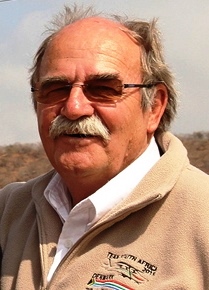
It is in the representation arena that Chris’ capacity to make sacrifices in the interests of aviation shone brightly in what at times is a dark environment.

Chris set the tome of things to come when in 1990 he was elected onto the Algoa Flying Club committee where he served for 15 years. During this period his work on projects such as the implementation of the requirements of the Air Services Act won him widespread recognition

In 1996 he took on the additional responsibility of treasurer of the South African Power Flying Association committee, a post he occupied with distinction until his appointment as Chairman in 2004. During his tenure on the SAPFA committee Chris has become known as one of General Aviation’s most redoubtable promoters. His efforts to curb the infringements of our right to fly are well illustrated by his contributions to the Part 61 consultations, ATNS and SAWS fees, averting compulsory fitment of autopilots for night flying, challenging the 12 year overhaul requirement and contributions to the NTCA discussion paper. In addition he also acts as editor of the “Joystick” magazine and is in fact its most prolific contributor. Of further note are his efforts to establish a milieu that will encourage the advancing of Aero Club and FAI objectives for record setting in South Africa.
His propensity for hard work and willingness to take up the cause on behalf of others quickly catapulted Chris into various leadership positions, particularly that of Chairman of the Algoa Flying Club and manager of the Protea team at the 2004 and 2006 World Rally and Precision Flying Championships. While tirelessly working on the daily requirements associated with his responsibilities, Chris has always remained focussed on the long term health of aviation. With this in mind he was instrumental in setting up the Aviation Watch South Africa information network to counter apathy of which General Aviation so often stands accused.

Chris’ unremitting selfless sacrifice since 1990, and specifically in the last three years, has made him a true champion of “Preservation of Free Flight” and wholly deserving of the Aero Club “Honorary Diploma”

An important part of the World Precision Flying Championships is the Landing Championship which comprises four different type of landings namely:

  • 1 Powered approach with flaps (This is the normal kind of landing executed by pilots every day)
  • 2 Glide Approach with/without flaps (Here the pilot is required to cut the power at 1000ft abeam the threshold and glide the aircraft onto the landing line. The use of flaps is optional)
  • 3 Glide Approach without flaps (Here the pilot is required to cut the power at 1000ft abeam the threshold and glide the aircraft onto the landing line. No flaps are allowed in this approach)
  • 4 Barrier Landing (This is a very steep approach where a 2 meter barrier has to be cleared before touching down on the landing line)

For each landing the pilot must touch down in a strip marked on the runway which is only 2 meters in depth. Penalties are awarded for ever meter short or long of the zero box. The competition has been dominated by the Polish and Czech Republic teams for years.

The World Precision Flying Championships were held in Troyes, France in July 2006. The conditions for the landing competition were reasonable with temperatures of up to 40 degrees Celsius and light and variable winds. The high temperatures resulted in variable lift in the circuit. The landing box was set up for landings on Runway 18 which was the preferred runway of the organisers despite the slight tailwind prevailing in the early morning. Landings No 1 & 2 were executed in the first half of the day and landings No 3 & 4 after lunch, this time on Runway 36.
Results were delayed due to a protest being received regarding a tailwind that was in excess of that allowed by the rules. After the Jry made a ruling Ron Strik was declared the winner and 2006 World Landing Champion with a total of 4 points.

This is the second time Ron has won the title, previously having won it in 2000 in Sweden. This is the first time in the 17 year history of this competition that a competitor has won the trophy twice.