Report on the Meeting of the FAI General Aviation Commission (GAC)

held in Paris, France from Thursday 9th to Saturday 11th November 2017.

By Frank Eckard

The meeting was attended by delegate Hans Schwebel and alternative delegate Frank Eckard.

South Africa will host the 2020 World Rally Flying Championships and World Air Navigation Race Championships. Our organisation will be celebrating its centenary in 2020. As part of the 100 year celebrations the SAPFA committee decided to bid for these two prestigious competitions. France gracefully postponed their bid and our bid was unanimously approved.

We would like to encourage all South African pilots who have aspirations to obtain their Green and Gold to start their campaign and training in order to qualify to represent their country in these two prestigious World Championship events. Please speak to any SAPFA committee members for more information.

The Rally Flying Sub Committee. The chairman had through the year obtained the majority opinion and drafted a new set of rules for our future competitions. The new rules will allow the crews to plot their maps before the start point, however still challenging them with accurate navigation, timing and observation.

The next World Rally Flying Championships will be held in Dubnica, Slovakia from the 5 – 11 Aug 2018.

The Precision Subcommittee With the advances in GPS equipment installed in the modern cockpit, the precision committee decided to lift the ban on using GPS devices for these competitions, this will mean that pilots will no longer miss the turn points, but map reading skill will still ne required to win the competition.

The next World Precision Flying Championships will take place Castellon, Spain – June 2019

The Air Navigation Race Subcommittee Following the experience at the 1st World Air Navigation Race Championships in Spain, they decided to amend the rules and the clock will now continue to run when you are out of the parcour, and not stop at 300 points.

The second World ANR Championships will be held in Santa Cruz, Portugal – September 2019.

The calendar therefore was accepted as follows.


2018 – World Rally Championships – Dubnica nad Váhom, SLOVAKIA 5 – 11 Aug 2018

2019 – World Precision Flying Championships – Castellon, Spain – June 2019

2019 – World Air Navigation Race Championships – Santa Cruz, Portugal – September 2019

2020 – World Rally Flying Championships – Venue TBA, South Africa – Date TBA

2020 – World Air Navigation Race Championships – Venue TBA, South Africa – Date TBA

2021 – World Precision Flying Championships – France

2022 – World Rally Championships – France.

Election of officials.

Hans Schewbel will continue to serve as Vice President and Frank Eckard as the Chairman of the Rally Flying Subcommittee.

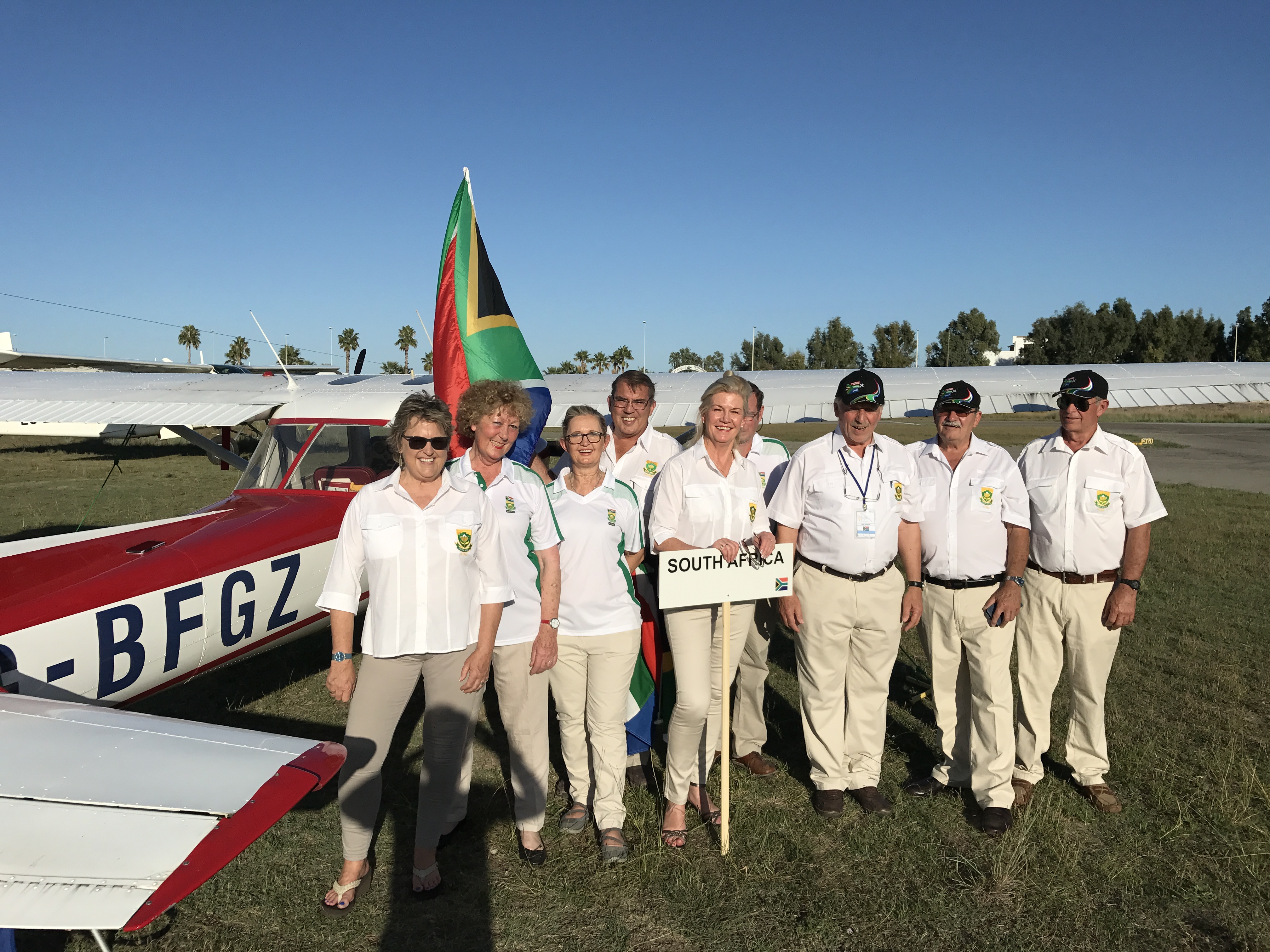


By: Cally Eckard

The South African ANR team of six excelled at the first ever World Championships of this new and exciting sport, hosted by Aeroclub Castellon, Spain, in September 2017.

The three teams, each consisting of a pilot and a navigator, were chosen at the first SA ANR Championships held in Brits in August, and were accompanied by World class Judge Arddyn Moolman, and supporters Barbara Friebose and Leon Bouttel.

The SA Team

The team, consisting of Hans Schwebel and Ron Stirk, Mary de Klerk and Thys van der Merwe, and Frank and Cally Eckard, took advantage of the training week in which they managed to complete all the training routes.  Having practised in SA on 1:200 000 maps and flying at a nominated speed of 80 knots, they discovered that the local rules required them to fly on 1:150 000 maps at a speed of 75 knots.  Taking this all in their stride, they also discovered that their Cessna 152 had not arrived, and was only going to arrive all the way from Portugal three days late.  However, they made a plan and even had to fix the mag drop on the Portuguese plane when it arrived, costing them another day of practise. Also, the local aircraft mechanic had to be coaxed out of church to fix the plane, and arrived without any tools.  Another challenge was obtaining fuel, which is outsourced at Castellon airfield, and is closed for siesta between 2 pm and 3:30 pm, causing much consternation when practise time is already compromised.

The area of Castellon is a large coastal plain surrounded by mountains reaching up to 2000m, making for a very varied and challenging task.  Compared to SA, their maps are extremely accurate and up-to-date and contain contour lines rather than hypsometric tint.  Initial training flights enabled the participants to decipher how what is on the map appears on the ground.  Training on Google Earth before they arrived in Castellon helped familiarise themselves with the terrain.  Despite being handicapped by flying unfamiliar aircraft (the other teams were all from Europe and all except for Cyprus and Norway flew their own aeroplanes) the South African team were placed 14th, 19th and 22nd out of 32 in the Navigation Section of the competition.  This consisted of 4 stages held over 4 days.

The final portion of the competition was the Precision Landings, consisting of two normal landings and one forced landing (glide approach without flaps) in which the pilot has to land as close to the one metre landing line as possible.  Penalties are given for landing outside the line.  Here the SA team is traditionally feared by the European countries, as we have a World Air Games gold medallist in Frank Eckard, a twice World Landing Champion in Ron Stirk, and a several time SA landing champion and runner-up World Champion in Hans Schwebel.

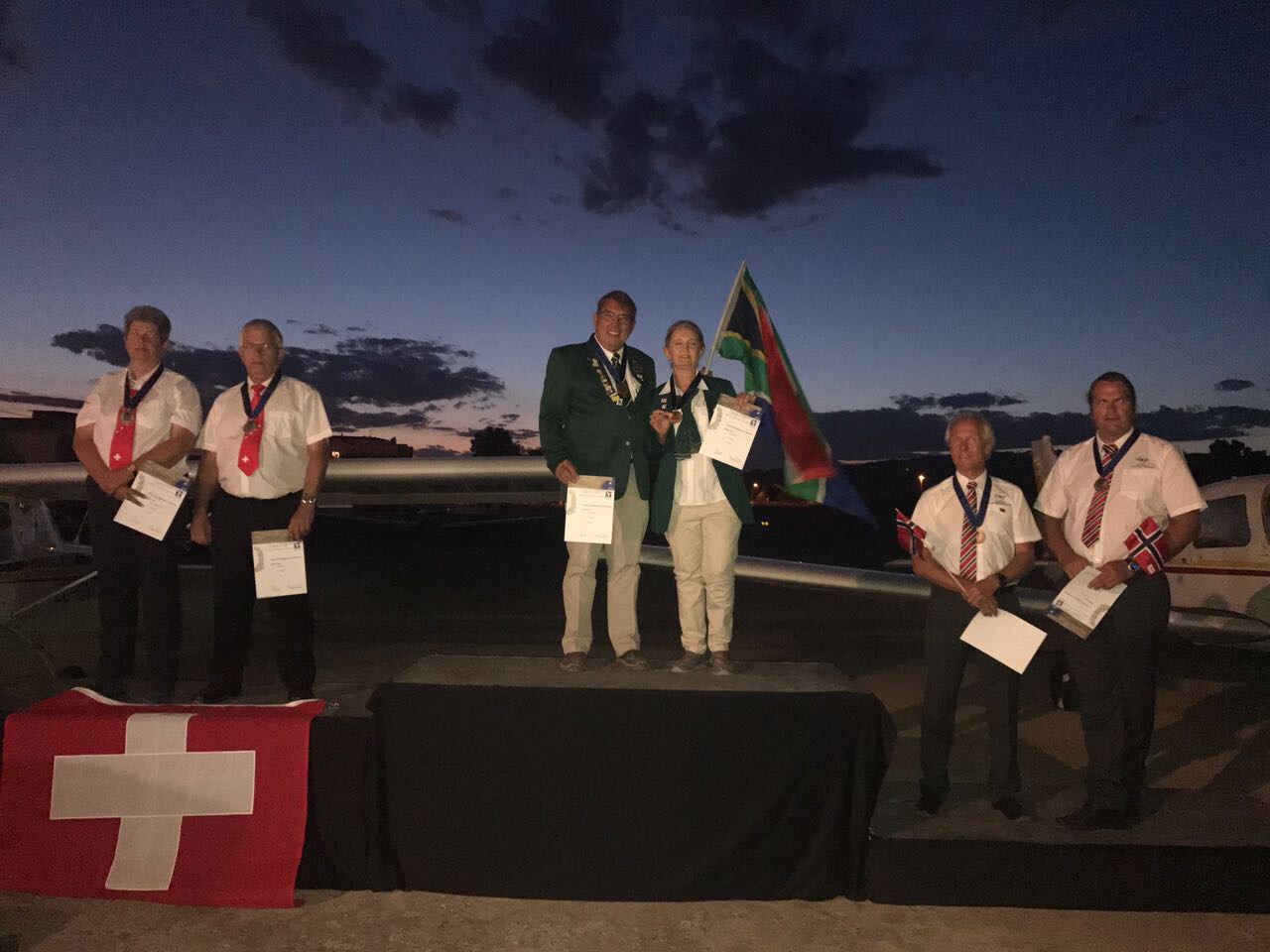
The team did not disappoint, with Frank and Cally Eckard winning gold with two landings on the zero line and one 3m after it, Mary de Klerk coming 7th and Hans Schwebel 15th.

SA wins Gold in the Landing Section

This form of the sport is gaining very quickly in popularity both amongst newcomers to flying and to current Precision and Rally pilots.  It requires far more teamwork and input from the navigator as they work together to maintain their course along a software-created zigzag “corridor”.  It is much shorter in distance and duration, and requires fewer volunteers, making it much more affordable.  The software is easier to use, making it much quicker to plan and organise, and the trackers which are placed in each plane enable spectators to watch the progress of each team either at the airfield on big screens, or on any device, make it a very exciting spectator sport.

The sport is designed to improve fundamental flying skills, emphasizing the ability of the crew to follow a precise track whilst adhering closely to a time schedule, a given corridor and a groundspeed. The Landing portion emphasizes the ability of a pilot to land an aircraft in short and narrow places with the simulation of trees or other obstacles on the approach, thereby fully demonstrating his or her ability to handle an aircraft both accurately and safely.

The rules are deliberately kept simple and easy to remember, to encourage young and new pilots to participate in a fun and challenging but “doable” flying sport.

Being the first championship held on the world stage, some minor changes will have to be made to the model, but currently the rules give each team 30 minutes to plan their flight after being given a map with the printed “corridor” on it.  They then have 15 mins to jump into their aeroplane, and have to take off at a predetermined time, and are given a particular time to fly to the Start Point.  The Start and Finish Points are the only points which are timed, and the whole competition is flown at a speed determined by the organisers.  The route is approximately 45 mins long from take-off to landing, and requires the participants to fly along the narrow “corridor” which is a series of zigzag legs with “turnpoints” at any place on the map, not necessarily a feature.

For more information regarding Air Navigation Race please go to: www.fai.org/gac-our-sport/air-navigation-race and please look out for more ANR events hosted by SAPFA. 

President’s Trophy Air Race 2017

Hosted by

East Rand Flying Club

SPRINGS

Results Day 1 Results Day 2 Results Overall Results Trophies

PTAR_2017_Results.xls

SPONSORED BY

Celebrating its 80th Anniversary – PTAR at Springs 2017

edited by Frank Eckard with contributions from Willie Bodenstein, Rob Jonkers, Cheryl Smit and Athol Franz

This year marks the 80th anniversary of the PTAR and the 20th year since the last air race was held in Gauteng.

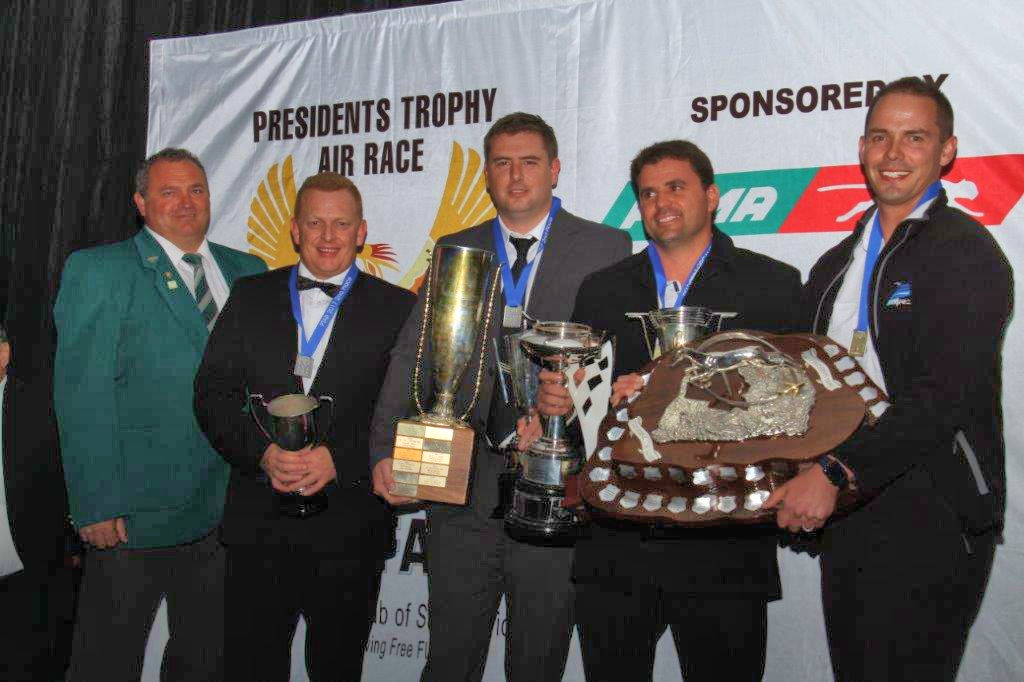
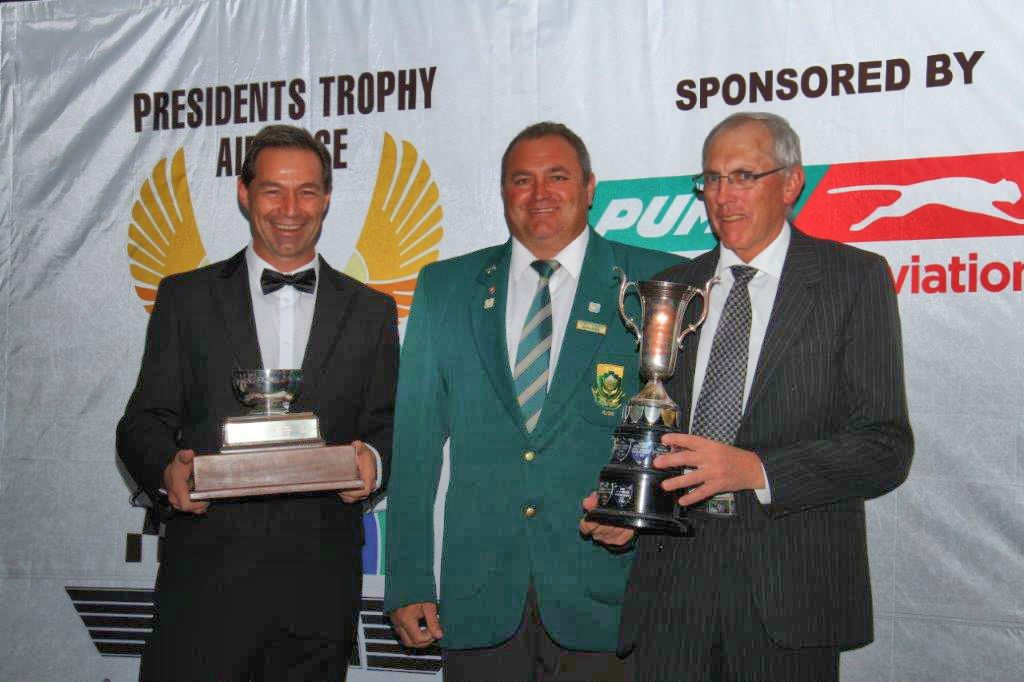
…..and the winners were……..

1st Place on right Victor Coreia/ Derek Bird/ ZS-PFD
2nd place on left Mark Dethian/ Werner Hattingh/ ZS-NEH


Celebrating its 80th Anniversary – PTAR at Springs 2017

edited by Frank Eckard with contributions from Willie Bodenstein, Rob Jonkers, Cheryl Smit and Athol Franz

This year marks the 80th anniversary of the PTAR and the 20th year since the last air race was held in Gauteng.

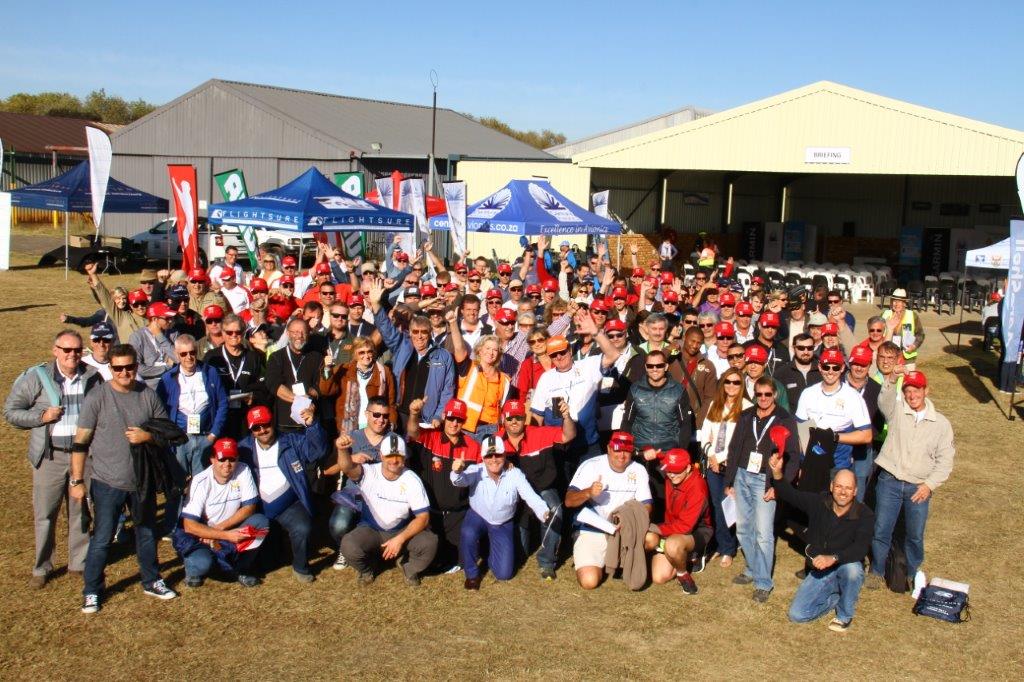
This year’s PTAR held in Springs attracted 67 entrants, somewhat down on last year’s 89, ascribed perhaps to the proximity to the big controlled airspace areas and the perceived difficulty in this area. Nonetheless, competitors started arriving on Thursday throughout the day, most having landed by 12 pm.

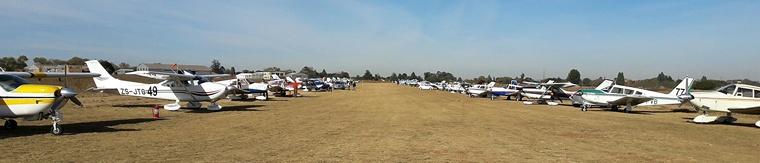
Springs Airfield Friday morning
The race is a timed handicap event where the winner is the one who has gained most against their handicap. This year saw a technological step forward in the handicapping. We have now gathered significant logger data from previous years and found that the recorded 3D speed was an accurate record of aircraft performance which separated out the navigation performance of the crew. In parallel we approach the Wits University Aeronautical Engineering department to take a fresh approach to handicapping. As Chris Linakis and the handicapping committee developed the new approach the university found that they could not devise a better formula than the one developed by the SAPFA Handicapping Committee.

Competitors

Details regarding the formula were made available well in advance to give competitors the opportunity to use it to calculate their own handicaps either before or at any time during the weekend. The article can be view here.

The following adjustment will be made by the adjudicators in terms of the PTAR Race Rules and Regulations. If a competitor exceed his or her 3D speed after a day’s racing, the new 3D speed will automatically be entered into the Formula and it will calculate a revised handicap.

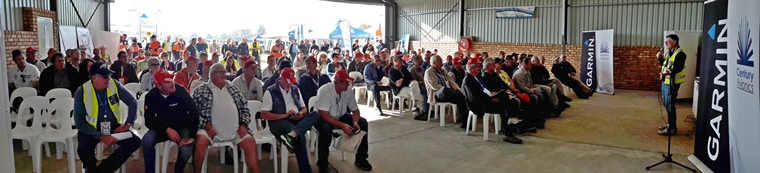
After the briefing on Thursday afternoon, everybody retired to complete their race plot ready for the 1st day.

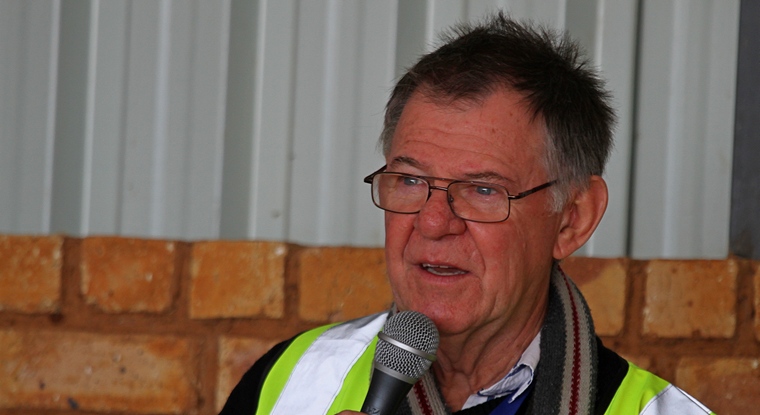
Robin during Friday’s briefing

Friday morning dawned with pristine weather conditions, although the wind was predicted to become a significant factor for the day blowing westerly and increasing in strength to around midday. This would be hampering the slower aircraft as they would be taking longer around the course, which was primarily a triangle in shape with the first leg to Piet Retief, the second shorter leg to Wakkerstroom and the last leg back to Springs. Although an easy navigation course, the terrain around Piet Retief and Wakkerstroom was in the berg area and needed careful flying with the Westerly wind.


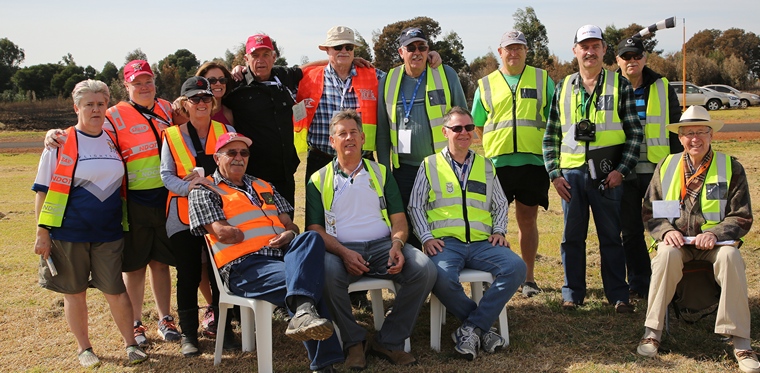
Competitors

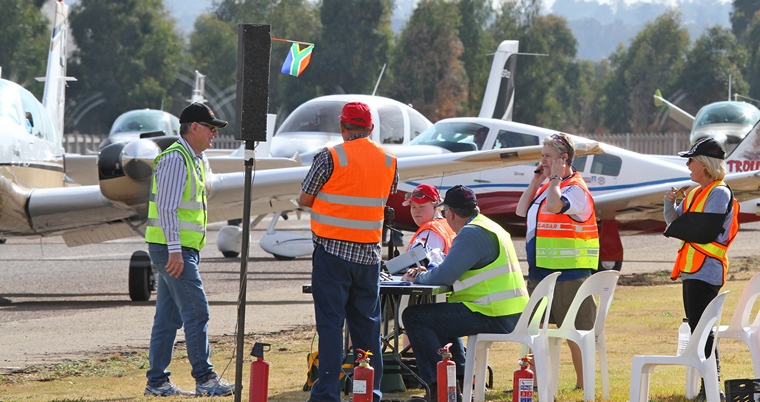
Start Line Marshals

As it was the flights on day one were marred with a few incidents, the worst being the Beagle Pup being caught out in a berg rotor which could not be outclimbed with impending terrain impact, fortunately the crew survived, some others had technical problems that had either to carry out precautionary landings or divert to other airfields for attention. There was one competitor however that got totally lost and given the analysis of the track shown at the briefing afterwards, was a real hoot to see, especially given the fact that fuel was running low and had to do an outlanding at Majuba power station to find fuel to uplift before finding their way back to Springs.

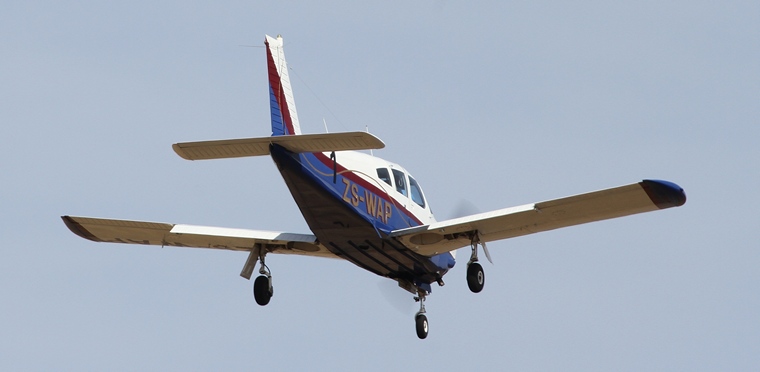
Last year’s winners at Bethlehem, Phillip Jacobs and Nico Smith in the Piper Arrow ZU-WAP, in Race number 1 was back to defend their title. However, having almost completed the first leg they unfortunately had a complete loss of power four miles from the field.

Race 1 Piper PA-28R-235B Arrow engine failure on return after completion of Leg One.

At the end of day on we were treated to a display by the Flying Lions in there new Puma Energy livery.

Flying Lions – Scully Levin, Arnie Meneghelli, Ellis Levin and Sean Thackwray

At 10.00 Robin waved Dieter Bock and Dale de Klerk in race #10 Lancair Legacy ZU-DBC with a starting handicap of 218.56 off and the race was on. Dieter and Dale eventually finished in 17th place with an average speed of 224.78 knots.


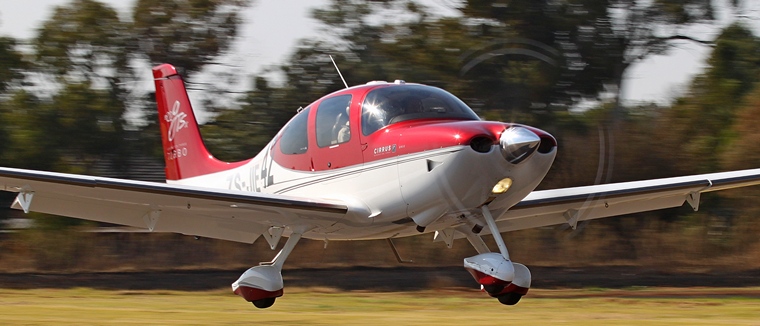
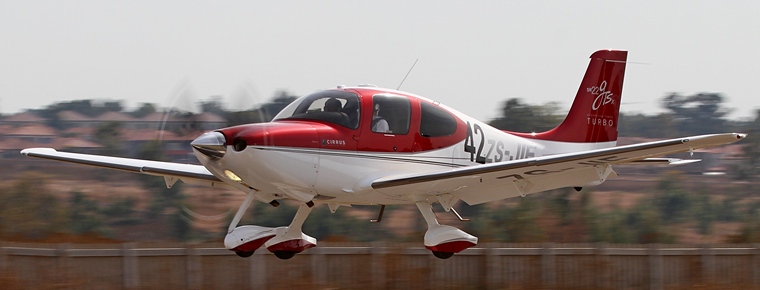
Following them were Mike Howell and Gerhard van der Westhuizen in the Race # 7 Glasair III ZS-WBT at 216.28. The Glasair did not compete in the second leg. Next was the first of the twins, Race #45 the Beech BE58 ZS-KCS off 198.64 crewed by Mario Febbraio and Eric Addison handicapped 198.64 who finished 9th overall. Fourth of the starting line was Race 42 the Cirrus SR22 ZS-JIE crewed by Alex Dyason and Johan van der Hoven with a starting handicap of 186.94. They finished in third place overall.


Fifth was Race # 15 the Ravin 500 piloted by Calle Hedberg and navigator Mike Visagie handicapped at 182.45 who finished 36th overall.


On Saturday morning the slowest aircraft is first off and carrying the advantage from day 1 the take off times are calculates to achieve a simultaneous finish of the whole field at exactly 13h00. Weather conditions on day 2 were similar to day one with a Westerly wind increasing during the day. The course this time was in the figure of a bow tie with a crossover close to the airfield, with the first bow towards the south to Standerton and Villiers and the second bow to the north to the N4 and then to Kriel. While the course had no major mountainous terrain several of the turn points caused navigation challenges, with a few misses at Standerton, the N4 and Kriel.

The first take-off was around 10h40 and is an interesting spectacle to observe from the ground as some groups of competitors with similar handicaps were taking off within 15 seconds of each other, quite a sight to see more than 6 aircraft in line behind each other climbing out.

As the flights progressed a live tracking screen was set-up in the briefing hangar for some spectators to watch around 6 competitors who had their smartphones recording their flight’s progress, particularly interesting was to see when they were closing in to the crossover point and then going outside to see them come past. Although the livetrack is in its infancy and very dependent on good cell reception and fast internet for the ground station, it has promise to give better spectator value.

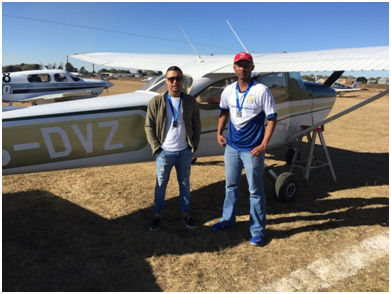
A True Test of Our Flying Ability. Report by Mothiba Kanyane and Jody Harms


The President’s Trophy Air Race proved to be an exciting challenge for RAASA’s Inspector Mothiba Kanyane (pilot) and Administrative Manager Jody Harms (navigator). They entered into the race with a Cessna C172 with the slowest handicap speed of 104.88 kts, but managed to land ahead many other aircraft. As first timer contenders to the race, the team performed exceptionally well. “We learnt a lot from interacting with the other pilots in the race as well as enjoyed the thrill of flying amongst some of South Africa’s top pilots” – said Mothiba Kanyane (Pilot)

The race fleet encountered strong Westley winds and moderate turbulences. Through thorough planning and advice from other experienced racers, the team managed to find the sector points using nothing but traditional flying and navigational methods. “In the end it was a steep learning curve, and there was a lot of knowledge taken in from this experience, experience that cannot be learnt from a book and we had fun”.

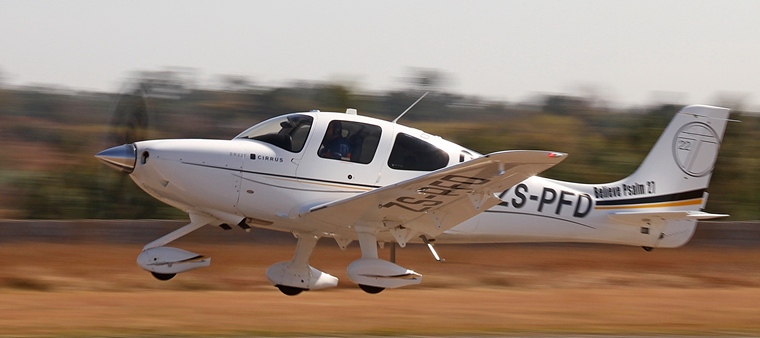
As 13h00 came the first competitor across the line was a Cessna 180 ZS-NEH followed by a Cirrus ZS-PFD, although once the scoring was done, the Cirrus was declared the winner with the C180 second with only 3 seconds separating them. The first 30 aircraft were over the line within the first 10 minutes. For the second day, no incidents were reported, and overall a good race result.


1st Place Victor Coreia and Derek Bird Bird

2nd Place Mark Dethian and Werner Hattingh


3rd Place Alan Dyason and Johan van der Hoven. Photo Cheryl Smit

4th place Mike Finch and Sandy Bayne

5th Place Arthur de Kock and Freddie van Rooyen

Alex Dyason/ Johan van der Hoven/ ZS-JIE

1st Place on right Victor Coreia/ Derek Bird/ ZS-PFD
2nd place on left Mark Dethian/ Werner Hattingh/ ZS-NEH

And then the party began.


Brought to you by

SAPFA