
Articles Precision (Page 11)

IMPERIAL BANK NATIONAL PRECISION FLYING CHAMPIONSHIPS

Brits – 16 to 18 May 2002

By Adrian Pilling

Well before you know it another year has passed and all of a sudden the Precision Flying Nationals are upon us again. This year it was held at Brits which seems to be the centre of precision and rally flying activity at the moment.

2002 Precision Flying Championships - Marshalls
The Team of Red “Indians” – Out faithful marshalls.

I think that the work commitments of most participants, and the state of the economy put pressure on everybody, yet it is a tribute to all that there was a great turn out – originally 23 entrants and lots of marshals and helpers. As the competition drew closer the numbers dropped slightly, but the final turn out was a marked improvement on earlier years. Well done all.

The Brits airfield is ideally suited to this sort of event as it is out of controlled airspace and yet close enough for most people. The most important aspect is the locals who are very aviation orientated and only too willing to help – this is a real bonus and has certainly put Brits on the map – flying wise. Now when it comes to hospitality – these people are world class – taking friendliness to a new level.

Dale de Klerk (Competition Director) and his team did a great job of putting together a competition that was world class. This is important, as the team to the World Precision Flying Championships in Croatia, would be taking part – and there would be no holds barred. Another aspect is that South Africa was the first country in the world to standardize on the new electronic logger system – a tribute to Jan Hanekom who developed the Air Observer system, a world first), and these were used to devastating effect.

A fun opening ceremony with local fare was held on the Wednesday night – most of the pilots retiring fairly early as the first briefing was at 07h30 with take offs shortly after that

Thursday 16th May

Competition Day 1. The day was the usual winters day – brilliant blue sky, cold in the morning and great at lunch time. The first batch of pilots had their briefing and then went into flight planning. As it was run to world standards, Renier Moolman was allowed to assist the Sportmans class competitors with the flight planning.
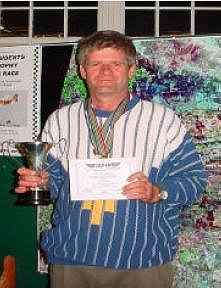
P vd Velde
Sportsman Class Winner – P vd Velde

This route was an eye opener for the crews. The standard was definitely at world level, soon had the pilots working very hard to stay on track and find the ground markers and photographs. An aspect of this new electronic era is that you can place a secret checkpoint anywhere – you don’t need ground marshals to be there. The same goes for turning points and so on. The system even measures track errors and in flight misdemeanors that previous generations of competitors got away with. Wow what a different world this is. Within minutes of the final crews returning the provisional results were ready, but due to the first set of landings being run, they were held back till later.

After a hearty lunch the first two landings were run, using the electronic scoring grid or Bingo Box as it is commonly known – this measures your landings accurate to the nearest meter. The field lined up on RWY02 and the competition was on. The first landing was the freestyle (engine & flaps permitted) and the second was the glide approach. Much fun was had by all with the pilots standing on the side lines watching their comrades landings.

Back at the clubhouse the provisional results were released to the competitors. Wow what an eye opener it was. The pilots could not believe the number of timing penalties they had incurred, the new electronic system monitoring the tracks and times every second – phew.

Later the results were posted – Adrian Pilling 180 penalties, Nigel Hopkins 204, Hans Schwebel 206, Jan Hanekom 295, Ron Stirk 340, Barry de Groot 347, Frank Eckard 360, Mike Cathrow 430, Walter Walle 820, Ernie Alexander 980, A Kluyts 1182, Wendy Barter 1887, Frikkie Lubbe 2147, T Kluyts 2236.This was just the open class, then there was still the Sportmans class to consider ( P.V d Velden, G.Brink, Gary Grant)

Now here’s where it gets interesting. Adrian asked to look at his logger route and there it was discovered that he had in fact flown just three meters outside the electronic gate – the equipment had faithfully recorded the fact. This was devastating as it meant that Adrian now received a maximum penalty for this point, in fact putting him in 4th position with 339 penalties, and making Nigel, Hans and Jan 1st, 2nd and 3rd respectively. Wow get used to it guys this is how it will be worldwide form this year onwards.

Friday 17th May

Competition Day 2. With the start order the same as the previous day, the pilots went through the motions and soon after an interesting route were back on the ground. After debrief and lunch it was back out to the runway for the landings – this time on RWY 20. This caught most of the pilots off guard as they had not used this runway for quite some time.

2002 Precision Flying Championships - Nigel Hopkins, Jan Hanekom and Hans Schwebel
Nigel Hopkins, Jan Hanekom and Hans Schwebel – 1st, 2nd and 3rd

At the club house the provisional results were handed out again and again it was amazing to see how the electronics was catching people out. There were many complaints of high timing scores, but the reality is that the Flight Recorder is accurate and the pilots not – hmmnnn food for thought. The observation had proved challenging as well, with the photos proving difficult and the ground markers cunningly placed.

Results for the day (first 10 places) were: Nigel Hopkins 248, Jan Hanekom 371, Adrian Pilling 530 (another electronic surprise), Ron Stirk 534, Barry De Groot 560, Hans Schwebel 606, Frank Eckard 636, Earnie Alexander 819, Mike Cathrow 823, A Kluyts 831. This really set up the positions for the next day.

Saturday 18th May

2002 National Precision Championships - Competitors
Competitors at the 2002 National Precisions

Competition Day 3. This was the make or break it day for some and for others an opportunity. Dale had mentioned to us that this was the difficult route and would really sort out the men from the boys. As the start order was the same as for previous days, the pilots new the routine and got on with the job of giving Dale and his team a real go.

Fun and games was had during this time as Barry de Groot had experienced a spot of fuel starvation in his Jabiru at checkpoint 2. This forced him to abandon his navigation. Earnie returned to Brits as a radio relay in case the situation got serious, and was allowed to restart the competition. Hans delayed his progress for some time to make sure that Barry was OK and to act as the radio sender. After quite some time Barry and his plane made it back to Brits and the plane was checked and readied for Mike Cathrow to fly, although by now very much later in the afternoon.

After all this the provisional results for the day were announced. There needed to be some adjustments made in order to allow for Barry’s emergency – Hans had his penalties reduced to redress the penalties incurred for his slowing down along the leg in order to radio for help. After all the adjustments were made the results for the day were (top 10 only): Nigel Hopkins 203, Adrian Pilling 228, Hans Schwebel 289, Ron Stirk 312, Jan Hanekom 336, Earnie Alexander 422, T Kluyts 544, Frank Eckard 619, Mike Cathrow 746, A Kluyts 836. Barry unfortunately by default got almost maximum for this day.

After a fairly rushed afternoon and some amazing work by the helpers the clubhouse was readied for the evening banquet.

The evening was absolutely great with lots of fun speakers and great speeches. Lots of thank you’s and remembrances. Specifically; Mr Dick Sumpter was remembered (He was a member of the New Zealand Team that often flew against us in international competitions. He was also a great manager who sadly passed away due to cancer) and a special presentation was made on behalf of the pilots by Adrian to Nigel for his courage and determination in fighting his way back from his ordeal last year. Later there was a Mitsubishi draw and Uli Gerth won a Pajero – OK it was a small one but it looks great. After a hearty meal the overall results were announced.

Open Class
Position Pilot Score Additional Trophies
1 Nigel Hopkins 672 1st Place Landings,
Navigation Trophy
2 Jan Hanekom 1033 2nd Place Landings
SA Private Pilot Champion
3 Hans Schwebel 1136 3rd Place Landings
4 Adrian Pilling 1157 5th place Landings
Observation Trophy
5 Ron Stirk 1229 4th place Landings
6 Frank Eckard 1741 7th place Landings
7 Mike Cathrow 2255
8 Ernie Alexander 2723
9 Andre Kluyts 3015 10th place Landings
10 Barry de Groot 3741 8th Place Landings
11 Walter Walle 4283 9th Place Landings
12 Tim Kluyts 4995
13 Frikkie Lubbe 5363
14 Wendy Barter 5831 6th Place Landings 1st
Place Lady Trophy
Sortsmans Class
Position Pilot Score Additional Trophies
1 Peter Van Der Velden 2168 Sportsman Trophy
2 G Grant 3259
3 D Warder 3394
4 G Brink 4722

A special presentation was made by Jan in his capacity as Chairman of SAPFA to two pilots who qualified for their Gauteng provincial colours: Ernie Alexander and Andre Kluyts.

Well done to both of you as this is the first step to National colours. Excellent performance – well done. Two other fun trophies were awarded: Adrian awarded the Pisspot Trophy for an interesting!!!!!! landing to Ernie Alexander, and Adrian’s propeller head hat was awarded by Nigel to Barry for his interesting return home on day 2 (he actually found himself temporarily uncertain of his position on the way back).

NATIONAL PRECISION FLYING CHAMPIONSHIPS

Cato Ridge – September 2001

By Adrian Pilling

Well can you believe it, before you know it another year has passed and it’s time for the National Precision Flying Championships again. This year it was held in Cato Ridge which is well known for it’s difficult terrain and great hospitality.

The pilots gathered from all around the country and before long the competition was in full swing. The usual stunning organization by Barry de Groot and his crew was evident and for the first time ever – in fact a world first – the national competition was run using GPS loggers (designed by Jan Hanekom). That means no room for argument and the device tells you where you are along the track every second. Boy was this going to be difficult! To top it off the results counted for selection of the National Team to the World Championships in Croatia in 2002, pressure indeed.

Thursday – Competition Day 1

The first day’s navigation exercise was interesting to say the least. The route took us over typically difficult countryside and all this with the accurate GPS Loggers to scare us. Later when all the crews returned it was into the first two prescribed landing tests.

The landing test was carried out on the rather bumpy runway with gusty winds. This resulted in more than one major bounce by competitors and this added some really scary penalties to the scores of several crews. Only two of the four landings were completed that day.

Later the provisional results for the day were announced. There were some recalculations required in order to interpret the results of the loggers correctly. After this was done the results were released as follows: Open Class positions; 1st place Nigel Hopkins, 2nd place Adrian Pilling, 3rd place Mary de Klerk, 4th place Jan Hanekom, 5th place Hans Schwebel. The navigation was so close that only 2 points separated the first two places, however the landings added significant penalties. In the Sportmans Class 1st place Wayne Bond, 2nd place Wendy Barter, 3rd place Paul Barter.

Friday – Competition Day 2

Well this was a fun day because the weather was so bad that the take off was delayed. In fact the route took the pilots way out over the Valley of a Thousand Hills. The cloud was so low in places that the pilots really had to fight the weather as well.

Due to the bad weather closing in, the pilots only managed to squeeze in one landing as part of their landing test. After this was completed the results for this day were announced.

Open Class positions; 1st place Nigel Hopkins, 2nd place Adrian Pilling, 3rd place Jan Hanekom, 4th place Mike Cathrow, 5th place Hans Schwebel. In the Sportmans Class 1st place Wendy Barter, 2nd place Wayne Bond, 3rd place Paul Barter.

Saturday – Competition Day 3

This was the final day and it took us out over some majestic areas. Out over farmland, incredible cliffs and down to the coast and back. This was a great navigation route and a real challenge to the crews.

Later the last of the landings was accomplished and then it was back to the club house for the prize giving. The results for the day were: 1st place Nigel Hopkins, 2nd place Adrian Pilling, 3rd place Mary de Klerk, 4th place Frank Eckard, 5th place Ron Stirk. In the Sportmans Class 1st place Wayne Bond, 2nd place Wendy Barter, 3rd place Paul Barter.

There was an air of expectancy at prize giving as the pilots wandered what their positions would be. After a great dinner the results were announced. 1st place Nigel Hopkins, 2nd place Adrian Pilling, 3rd place Mary de Klerk, 4th place Jan Hanekom, 5th place Mike Cathrow. In the Sportmans Class 1st place Wayne Bond, 2nd place Wendy Barter, 3rd place Paul Barter.

After a great prize giving the team to the World Precision Flying Championships in Croatia was announced: Nigel Hopkins, Adrian Pilling, Mary de Klerk, Jan Hanekom, Barry de Groot, Hans Schwebel (1st reserve), Mike Cathrow (2nd reserve). Adrian Pilling was elected Captain and Paul Barter was selected as team manager.

A very special thanks goes out to Barry de Groot and his team for a fantastic competition and of course to all the marshals, without which nothing would have happened. Thanks to the supporters who traveled from far and wide even coming from Brits (Deon Van den Berg and his team). We wish the team all the best for Croatia and thank the folks at Cato Ridge.

S.A. National Precision Flying Championships – Cato Ridge 2001 – Detailed Results

Day One Day Two Day Three
Pos Name Theory Mkrs Photo Flight Other Tot Theory Mkrs Photo Flight Other Tot Theory Mkrs Photo Flight Other Tot Land Grand Total
1 Nigel Hopkins 0 20 0 162 0 182 2 0 70 27 0 99 4 0 20 27 0 51 37 369
2 Adrian Pilling 0 0 40 144 0 184 1 0 30 84 0 115 0 60 20 66 0 146 374 819
3 Mary de Klerk 0 40 60 441 0 541 2 70 140 528 0 740 0 40 40 162 0 242 41 1564
4 Jan Hanekom 0 110 70 450 0 630 1 0 100 129 0 230 0 70 130 338 0 538 180 1578
5 Mike Cathrow 0 70 100 779 0 949 3 50 80 165 0 298 5 60 80 363 0 508 82 1837
6 Hans Schwebel 0 90 0 683 0 773 6 40 100 270 0 416 0 80 120 165 0 365 367 1921
7 Frank Eckard 0 60 40 720 0 820 1 40 160 507 0 708 8 40 60 186 0 294 136 1958
8 Ron Stirk 0 60 40 738 0 838 3 40 140 336 0 519 0 110 40 222 0 372 258 1987
9 Mauritz Du Plessis 0 80 80 1329 0 1489 0 70 160 1125 0 1355 350 270 160 1404 0 2184 228 5256
10 Walter Walle 43 160 120 1535 0 1858 0 70 160 413 0 643 350 250 100 1826 0 2526 283 5310
Sportsman Class
1 Wayne Bond 0 150 160 189 0 499 0 90 200 465 0 755 3 80 160 144 0 387 565 2206
2 Wendy Barter 2 450 160 1200 0 1812 25 170 180 165 0 540 0 340 160 657 0 1157 391 3900
3 Paul Barter 2 450 160 1200 0 1812 350 310 200 909 0 1769 350 280 160 549 0 1339 346 5266
4 James Lidderd 8 480 160 1280 0 1928 350 450 200 1200 0 2200 12 510 160 906 0 1588 1000 6716

2nd WORLD AIR GAMES

Cordoba, Spain – 23 to 29 June 2001.

By Adrian Pilling

Everybody knows about the Olympic Games, the Winter Olympics and the Paraplegic Olympics, but not many know about the Aviation Olympics. That is probably because they only started 4 years ago, the first being held in Turkey and the most recent in Spain. They even have a special name – World Air Games.

Spain was chosen as the venue for the 2nd World Air Games, because of its great climate and multitude of airfields. The events were held in the province of Andalucia at 11 airfields and represented 18 different aviation disciplines. South Africa sent teams to most of these events and in particular sent two very strong teams to the Precision Flying (single crew) and Rally Flying (two crew) events.

The combined precision and rally flying teams arrived at Madrid airport on the 15th June and then were pleasantly surprised to find out that the Spanish trains are very efficient. We caught the bullet train to Cordoba and within 2 hours were at Cordoba station where our manager picked us up and ferried us to our beautiful hotel, in the old town opposite the biggest Mosque in Europe. Unfortunately Spanish thieves are also very efficient and managed to relieve me of my laptop while waiting for the train at the Madrid main station.

Cordoba is one of those beautiful town, steeped in history and dating back to the Roman times – with the original bridge still being used – absolutely incredible. The climate was hot, in fact very hot. The team even has a photograph of an early afternoon temperature display, showing 49 degrees Celsius. One midnight the temperature was 31 degrees. Hot and dry – perfect for flying.

Saturday and part of Sunday were spent organising airplanes and getting to know the area. The countryside is most interesting. It’s either very flat (and completely cultivated with olive trees or wheat) or very mountainous and very difficult to navigate on. To make matters worse it was discovered that the map was less than accurate with complete road and farm track systems not even on the map at all. Just as this was starting to make things interesting, we were able to discover that the maps had the same symbol for a single farm house as for several hundred houses – challenging to say the least. We soon had it sorted out however, by sharing information after each days flying amongst the team at our regular evening team briefings. This allowed us to fast track the assimilation process and within a couple of days we were completely on top of things.

We also used GPS Loggers in each aircraft. This tracks the position of the plane during each second of the flight. At the end of each route we downloaded our track and superimposed this onto a map of the area. Thus we could see how we were doing each and every step of the way. This feature really helped us do well and learn the map and it’s peculiarities really well.

With our six teams sharing four airplanes, it was always going to be difficult to schedule ourselves to get the maximum training in, but with the Spanish summer providing us with daylight until almost 10pm, we were able to fit in most of the training that we wanted. However afternoon siesta and very late suppers wrecked havoc with our planning. Training was further complicated by the fact that four of our crews were flying both events and had to train in two disciplines simultaneously!

The official training week went really well with our teams putting in all the practice they needed. The organisers ran an unofficial navigation day as well as a landings day. Our teams used these as the culmination of the training and did really well during these two events. It was felt that training had gone well and that the crews should have a rest day on Saturday 22nd as Sunday was the Start of the precision event. We also had to move hotel and that added to the pressure on the crews – just keeping the mind right was an exercise in itself. The Spanish had decided that the Opening Ceremony would be held in Seville and true to Mediterranean form it would be a late night affair. It was decided by the team that as the Precision Competition was first, the pilots for this event would not participate as the busses would only return at 4am.

Sunday 23rd
The start of the Precision Flying Competition.

This was a most interesting navigation day with the route taking us through the mountains. A very difficult area indeed. When the crews returned there was much moaning about the difficulty of the course and the quality of the photographs (the colours were no longer accurate!).

Some of our navigators and supporters ( Ron, Mary, Renier & Frikkie) acted as judges and helped the organisers with the event. It was fun talking to them when we returned.

We new we had done well, but as there were protests still to come in we were not sure. Still by the end of day one we were as follows; Nigel Hopkins 1st, Adrian Pilling 7th, Barry de Groot 36th, Jan Hanekom 42nd and Hans Schwebel 45th. Clearly it was a tall mountain to climb but we were in with a chance of a team medal here (the first three scores counting).

Monday 24th

Landing test. The day started off with a little fog interfering with the first four groups of planes. Several of the planes lost sight of the runway on downwind (I know I was one of them). It was decided to delay the rest of the field for an hour and pretty soon we were all flying again. The morning exercise comprised the powered landing and the glide approach. At lunch we were ecstatic as a team as Barry de Groot had scored a double bingo (perfect score) putting him joint first and Adrian Pilling ad Nigel Hopkins were in the top ten. Both Jan and Hans had done good landings ad we were looking good for the team landing prize. Then came lunch.

The afternoon slot comprised the flapless glide and the powered barrier approach landings. Things went well with our pilots getting 5 bingos between them for that session. The pressure was on. There were some protests that had to be sorted out first but after that the placings were announced: Johannes Cserveny from Austria was the confirmed landing champion with only 6 penalties, then Otto Bauer from Austria was second with 7 penalties, then Nigel Hopkins joint 3rd with 11 penalties, then Adrian Pilling joint fourth with 17 penalties and so on. Tricky wind conditions in the afternoon took it’s toll of the pilots. Barry had an unfortunate gust to give him 22nd place overall, Jan managed 31st place and Hans 39th place after a gust of wind lifted his wing and he got penalised with a skip. The results left us in a great position as prior to the landings we were fighting the British Team for the team bronze medal, and after the landings we were able to pull clearly away from them.

Tuesday 25th

The last navigation day. The day started off as usual hot and dry. We were surprised to discover that the route took us back over the mountains and into the difficult terrain. This was really a bonus for us as all we had to do was fly well and the other teams would have to do very well indeed to catch us.

The day went very well for us with all our crews flying really well. We knew we had done well when the provisionals came out but could not be sure until all the protests were in. Later the results showed that in our team the placing were as follows; Adrian Pilling 5th, Nigel Hopkins 18th, Barry de Groot 21st, Jan Hanekom 34th and Hans Schwebel 41st. We were not sure if this combined score was good enough to get us into the medals or not. We had to wait for the prize giving.

Wednesday 26th
The first Rally Competition Day.

This day started off with a 4 hour delay due to fog and an increase in the plotting time for the navigator from 15 to 35 minutes. It was interesting to see that the route took us over some mountains and some flat land as well. A really nice mixture. The first day had us looking for 20 photographs as well as some really tricky turning points. At the end of the day and after protests we were thrilled to find out that our placings were; Hopkins/de Klerk 2nd, de Groot/de Klerk 14th, Pilling/Moolman 20th, Churley/Macintyre 27th, Schwebel/Stirk 33rd. This stood us in really good stead as the first two crews counted for team placings and we had built a nice platform for the rest of the competition.

Thursday 27th

The second rally day went well. The organisers planned a good route but inflicted strict penalties on several of us for not taxiing in certain areas, This lead to many protests but the penalties stood. At the end of the day the exhausted crews dressed and changed for our showcase evening.

We all did our bit as ambassadors for South Africa at the South African Evening with Mr Lungile Mkuyana from the South African Embassy. Here we showed the rest of the world how good we were and of course we showcased our event for 2003 which is the World Rally Championships to be held in the North West Province, at Sun City. Jan Hanekon in his capacity as Chairman of SAPFA conducted a great evening that was enjoyed by all.

At the same time the results for day two were announced. Hopkins/de Klerk 7th, Churley/Macintyre 18th, de Groot/de Klerk 23rd, Schwebel/Stirk 25th, Pilling/Moolman 32nd. The later crews landing well after 6pm. Several of us were hit by those taxiing penalties. It was getting close but the team placing was looking strong.

Friday 28th

Final Rally Day. This was a day spent in the olive trees and the flat lands. A really difficult course with many difficult turning points and lots of photos to find. The results for the day were eagerly awaited. Eventually they were announced. Hopkins/de Klerk 6th, de Groot/de Klerk 24th, Schwebel/Stirk 26th, Pilling/Moolman 38th, Churley/Macintyre 39th. We some of us had a particularly shocking day, but well done to the rest. All we had to do now was to wait for the final results to find out how we all did. That night we all celebrated the end of the 2nd World Air Games.

Saturday 29th

The organisers had arranged for an excursion to a sherry processing factory. This was interesting and we were back in time to enjoy a swim and prepare for the prize giving ceremony to be held in a very old square in the heart of the old city.

At the prize giving it was all about relaxing and enjoying ourselves with many tense moments and crossed fingers to find out how we had done. After dinner and speeches the results were announced:

Precision Flying

Individual Results:

  • Gold Medal: Waclaw Wieczorek Poland
  • Silver Medal: Robert Verbancic Slovakia
  • Bronze Medal: Adrian Pilling South Africa
  • Nigel Hopkins 6th Place
  • Barry de Groot 30th Place
  • Jan Hanekom 41st Place
  • Hans Schwebel 45th Place

Team Results

  • Gold Medal: Chech Republic (Chilar, Jakes, Hajek)
  • Silver Medal: Poland (Wieczorek, Darocha, Wieczorek)
  • Bronze Medal: South Africa (Pilling, Hopkins, de Groot)

Well done guys – we did it – an individual and a team medal. The best we have ever done. Well done to us all.

Rally Flying

Individual results

  • Hopkins/de Klerk 4th Place
  • De Groot/de Klerk 16th Place
  • Churley/Macintyre 25th Place
  • Schwebel/Stirk 26th Place
  • Pilling/Moolman 28th Place

Team Results

  • Gold Medal – Poland
  • Silver Medal – France
  • Bronze Medal – Czech Republic
  • 4th Place – South Africa

Wow guys that was close. We were less than 50 points from being in the medals. Well we will show them on home ground in 2003.

So ended the 2nd World Air Games with all the triumph and tragedy of the Olympics. Well done to our teams and to the supporters and to everyone who helped to make our team the success that it was. Well done to Adrian Pilling for his Medal – South Africa’s highest achievement yet. Well done to the Precision Flying Team for bringing back the medal (the countries highest achievement yet) and well done to Nigel and Dale for making the top ten in Rally Flying and very well done to Nigel for being in the top 10 in two disciplines. A special thanks to Deon van Den Berg our team manager for keeping us all together.

Representing South Africa

  • Deon Van Den Berg (Manager)
  • Mary de Klerk (Navigator/Judge Observer)
  • Adrian Pilling (Team Captain / Pilot)
  • Jan Hanekom (Pilot/Logger Expert)
  • Renier Moolman (Navigator / Judge Observer)
  • Richard Churley (Pilot)
  • Nigel Hopkins (Pilot)
  • Don Macintyre (Navigator)
  • Dale De Klerk (Navigator)
  • Frikkie Lubbe (International Judge)
  • Hans Schwebel (Pilot)
  • Ron Stirk (Navigator / Judge Observer)
  • Barry de Groot (Pilot)